
Elderberry, European Black
€ 2,68 (incl. VAT where applicable)
Antiviral berry for cold and flu season. Berries must be cooked before use.
47 in stock (can be backordered)
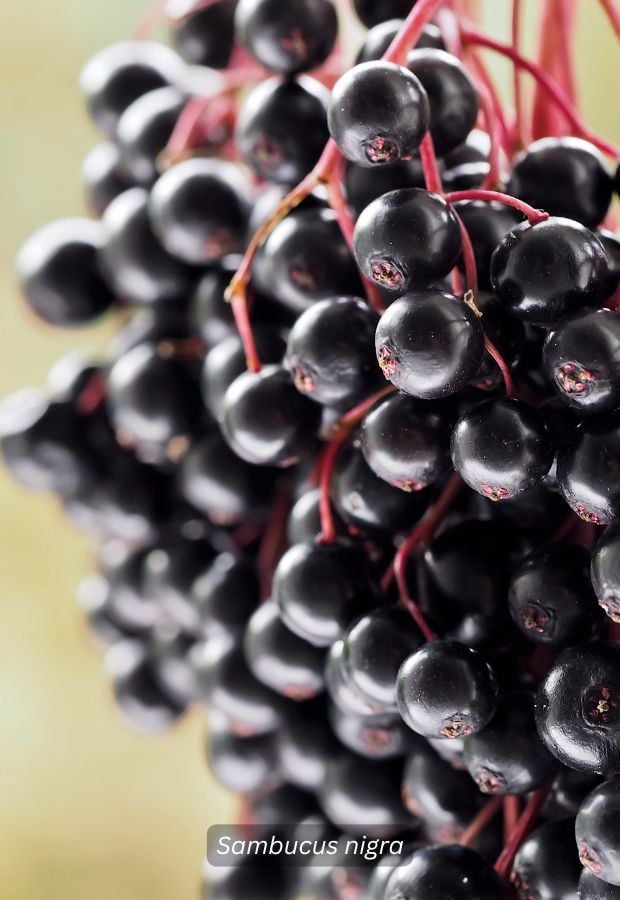
European Elderberry
Sambucus nigra
Botanical Family: Adoxaceae (Moschatel family)
Flu fighter: Clinically proven to shorten influenza duration
Dual harvest: Both flowers and berries are medicinal
Ancient medicine: Used since Hippocrates called it his “medicine chest”
Botanical Description
Sambucus nigra is a deciduous shrub or small tree growing 3-9 meters tall. The compound leaves have 5-7 toothed leaflets with an unpleasant smell when crushed. Large, flat-topped clusters (cymes) of creamy-white, fragrant flowers appear in early summer, followed by drooping clusters of small, glossy black-purple berries in late summer to autumn.
Medicinal Actions
Flowers: Diaphoretic, anti-catarrhal, anti-inflammatory, expectorant.
Berries: Antiviral, immunomodulant, antioxidant, anti-inflammatory.
Traditional uses: Every part of elder has been used medicinally for centuries. The flowers are traditional for fevers, colds, and allergies. The berries have been used for coughs and as a winter tonic.
Modern research: Elderberry has strong evidence for reducing the duration and severity of influenza. Studies show it can inhibit viral replication and modulate immune cytokines.
Body Systems Affected
Immune: Antiviral, particularly for influenza; immune-modulating.
Respiratory: Flowers for upper respiratory conditions; berries for coughs.
Integumentary: Flower water used as skin tonic.
Safety Information
⚠️ IMPORTANT: Raw elderberries, bark, leaves, and unripe berries contain cyanogenic glycosides and are TOXIC. Berries must be cooked before consumption.
Properly prepared: Cooked berries and dried flowers are safe.
Autoimmune conditions: Theoretically may stimulate immune system; use with caution.
Pregnancy: Cooked berries considered safe in food amounts. Consult practitioner for medicinal use.
Growing Guide
Hardiness: Zones 4-8.
Light: Full sun to partial shade.
Soil: Rich, moist, well-drained soil. Prefers nitrogen-rich conditions.
Sowing: Seeds require cold stratification. Easier from cuttings.
Spacing: 2-3 meters apart.
Harvesting
Flowers: Harvest whole clusters when fully open and fragrant, on dry mornings.
Berries: Harvest when fully ripe (black and slightly soft). Remove from stems before processing.
Drying & Storage
Dry flower heads on screens at 35°C (95°F); strip flowers from stems when dry. Berries can be dried or frozen. For syrup, cook fresh or frozen berries. Store dried material in airtight containers for up to 1 year.
📚 HerbWoman Resources
Find preparation methods, formulation ideas, and educational materials for European Elderberry in the HerbWoman Recipe Database and course materials.
Seed Details
Botanical Name: Sambucus nigra |
Brand: HerbWoman
| Weight | 0,01 g |
|---|








Reviews
There are no reviews yet.