
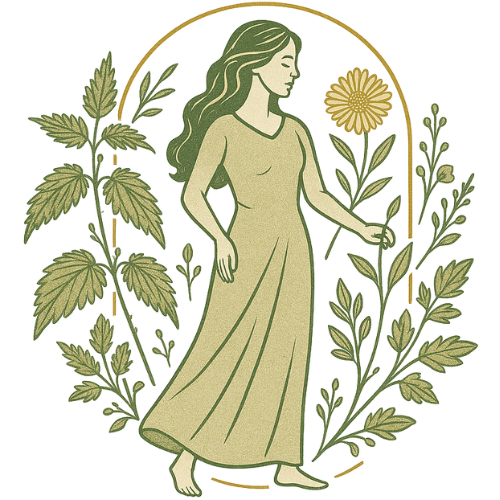
Urtica dioica

Urtica dioica
Urtica dioica
Plant Family
Urticaceae
Botanical Description
Stinging Nettle is a perennial herb growing 60-200 cm tall with opposite, heart-shaped, serrated leaves covered in stinging hairs. Greenish flowers in drooping clusters.
Cautions
Raw plant causes skin irritation. Generally safe when cooked or dried. May interact with blood thinners, blood pressure and diabetes medications.
Habitat
Waste ground, gardens, hedgerows, woodland edges, areas rich in nitrogen.
Harvest Instructions
Young tops harvested in spring before flowering. Wear gloves. Roots harvested in autumn.
Geographic Distribution
Native to Europe, Asia, and North Africa. Naturalized worldwide.
Growth Conditions
Partial shade to full sun. Rich, moist soil. Indicator of nitrogen-rich soil.
Plant Size
60-200 cm
Effects on the Body
Powerful diuretic, anti-inflammatory for joints, highly nutritious. Root supports prostate health. May help with allergies.
Active Constituents
Vitamins A, C, K, iron, calcium, silica, chlorophyll, flavonoids, histamine, formic acid, sterols.
Safety Information
Pregnancy Safety: caution
Breastfeeding Safety: safe
Dosage
Tea: 2-4 teaspoons dried leaves, steep 10-15 minutes. Root: 2-4 ml tincture. Cooked greens: as food.
Culinary Use
Young tops cooked like spinach. Used in soups, pasta, tea. Rich in protein and minerals. Must be cooked or dried to remove sting.
Folklore & Historical Use
Used for thousands of years for food, fiber, and medicine. Roman soldiers reportedly flogged themselves with nettles to stay warm.
Scientific Research
Extensive clinical research. Multiple randomized controlled trials support use for benign prostatic hyperplasia (BPH) symptoms - comparable to finasteride in one trial. European Medicines Agency approves for BPH, arthritis symptoms, and as a diuretic.
Magnea ingaló ólafsdóttir


