
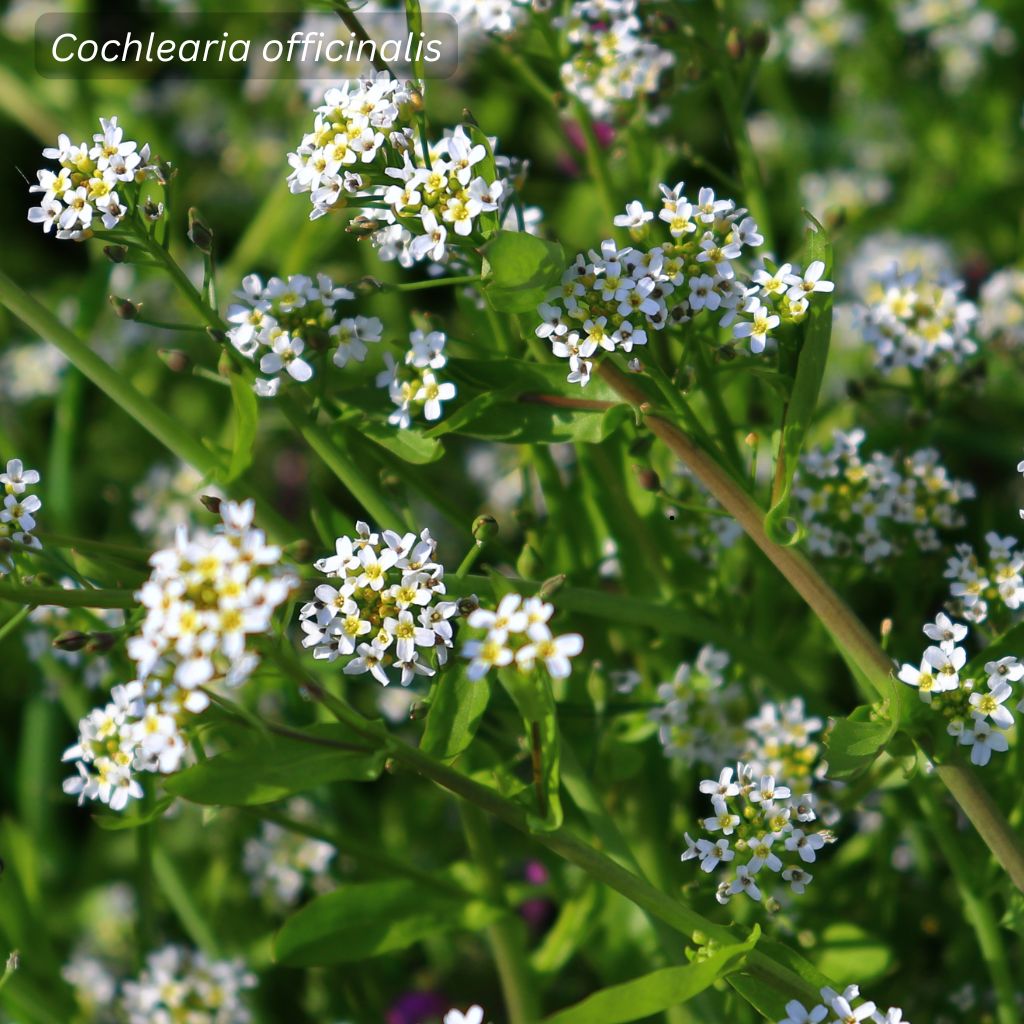
Cochlearia officinalis
Cochlearia officinalis
Cochlearia officinalis
Plant Family
Brassicaceae
Botanical Description
Common Scurvygrass is a biennial or perennial plant growing 5-30 cm tall with heart-shaped to rounded, fleshy leaves and clusters of small white four-petaled flowers. Has a pungent, mustard-like taste.
Cautions
Generally safe. Contains glucosinolates - use caution with thyroid conditions if consumed in large amounts.
Habitat
Coastal cliffs, salt marshes, sea shores.
Harvest Instructions
Leaves harvested before flowering for best flavor and vitamin content.
Geographic Distribution
Native to coastal areas of northern Europe including Iceland, British Isles, and Scandinavia.
Growth Conditions
Full sun. Tolerates salt and poor soil. Coastal conditions.
Plant Size
5-30 cm
Effects on the Body
Extremely high in vitamin C - historically used to prevent and treat scurvy. Mild diuretic.
Active Constituents
Vitamin C (very high), glucosinolates, flavonoids, minerals.
Safety Information
Pregnancy Safety: safe
Breastfeeding Safety: safe
Dosage
Eaten fresh as food. Rich in vitamin C when fresh.
Culinary Use
Young leaves eaten fresh in salads or sandwiches. Pungent, peppery flavor similar to watercress.
Folklore & Historical Use
Name refers to historical use preventing scurvy on sea voyages. Essential provision for sailors before citrus fruits became available.
Scientific Research
Very limited modern clinical research. Historical importance in preventing scurvy due to high vitamin C content. Contains glucosinolates with documented antimicrobial properties.
Halla Eyþórsdóttir


