
Equisetum arvense
Equisetum arvense
Equisetum arvense
Plant Family
Equisetaceae
Botanical Description
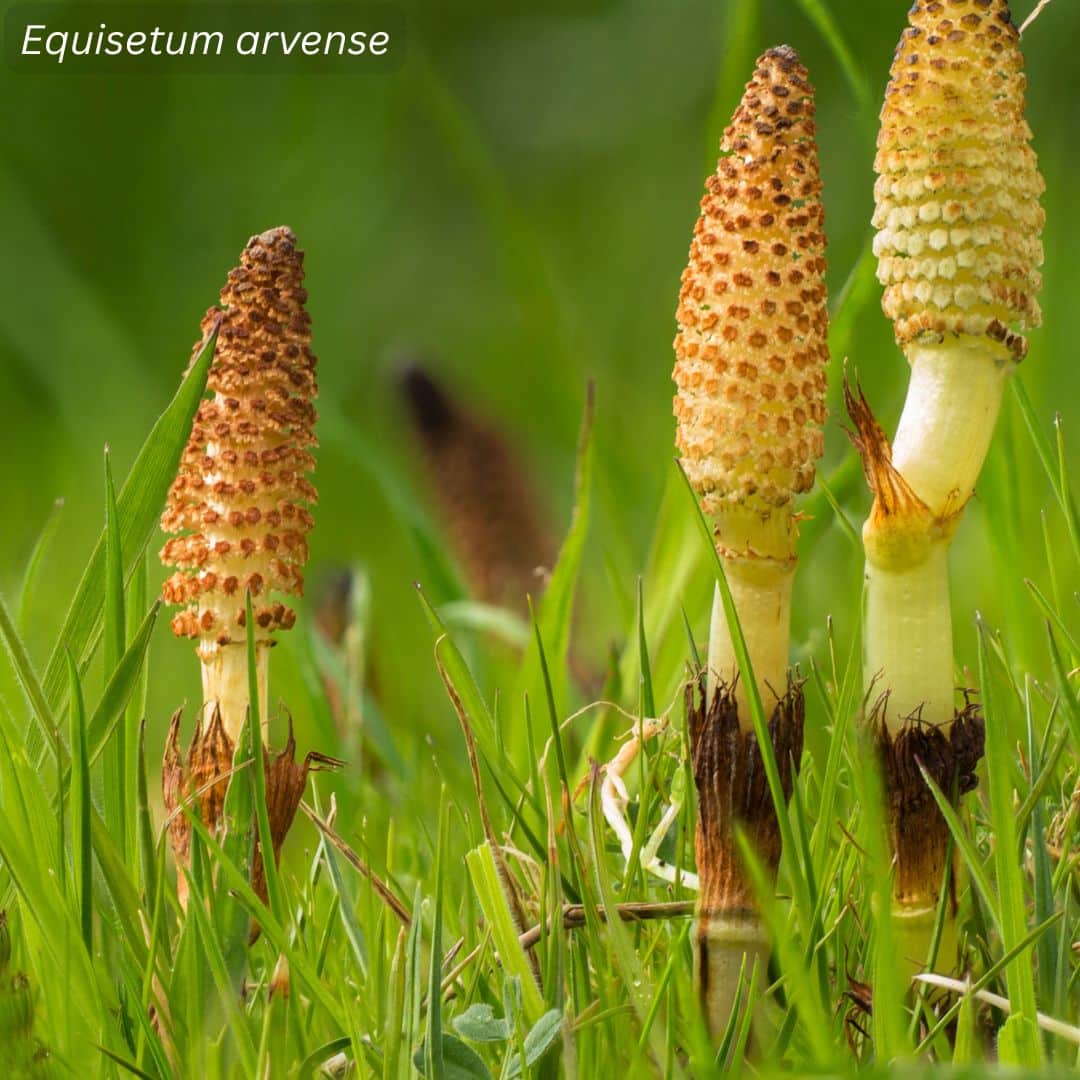
Field Horsetail is a perennial plant with two types of stems: fertile brown stems appearing in spring, and sterile green photosynthetic stems with whorls of thin branches appearing later, resembling a bottle brush.
Cautions
Not for long-term use without professional guidance. Contains thiaminase (may deplete vitamin B1). Not during pregnancy or breastfeeding. Caution with heart or kidney conditions.
Habitat
Fields, roadsides, railway embankments, disturbed ground, damp areas.
Harvest Instructions
Sterile green stems harvested in summer. Dry thoroughly.
Geographic Distribution
Northern hemisphere - Europe, Asia, North America.
Growth Conditions
Full sun to partial shade. Various soils but often indicates poor drainage. Very persistent.
Plant Size
20-50 cm
Effects on the Body
Very high in silica - supports bones, connective tissue, hair, and nails. Diuretic action. Traditional use for urinary complaints.
Active Constituents
Silica (up to 10%), flavonoids, saponins, phenolic acids, minerals (potassium, manganese).
Safety Information
Pregnancy Safety: avoid
Breastfeeding Safety: avoid
Dosage
Tea: 2-4 g dried herb, simmer 15 minutes. Not for prolonged use. Take vitamin B supplements if using regularly.
Culinary Use
Young fertile stems were historically eaten in Japan and by Native Americans.
Folklore & Historical Use
Ancient plant family dating back 350 million years. Used to polish pewter and wood (hence name 'scouring rush').
Scientific Research
European Medicines Agency approves for minor urinary complaints and minor wounds. Contains silica compounds with proposed benefits for connective tissue. German Commission E approves as diuretic for edema.
Jóna Heiða Sigurlásdóttir


