
Prunella vulgaris
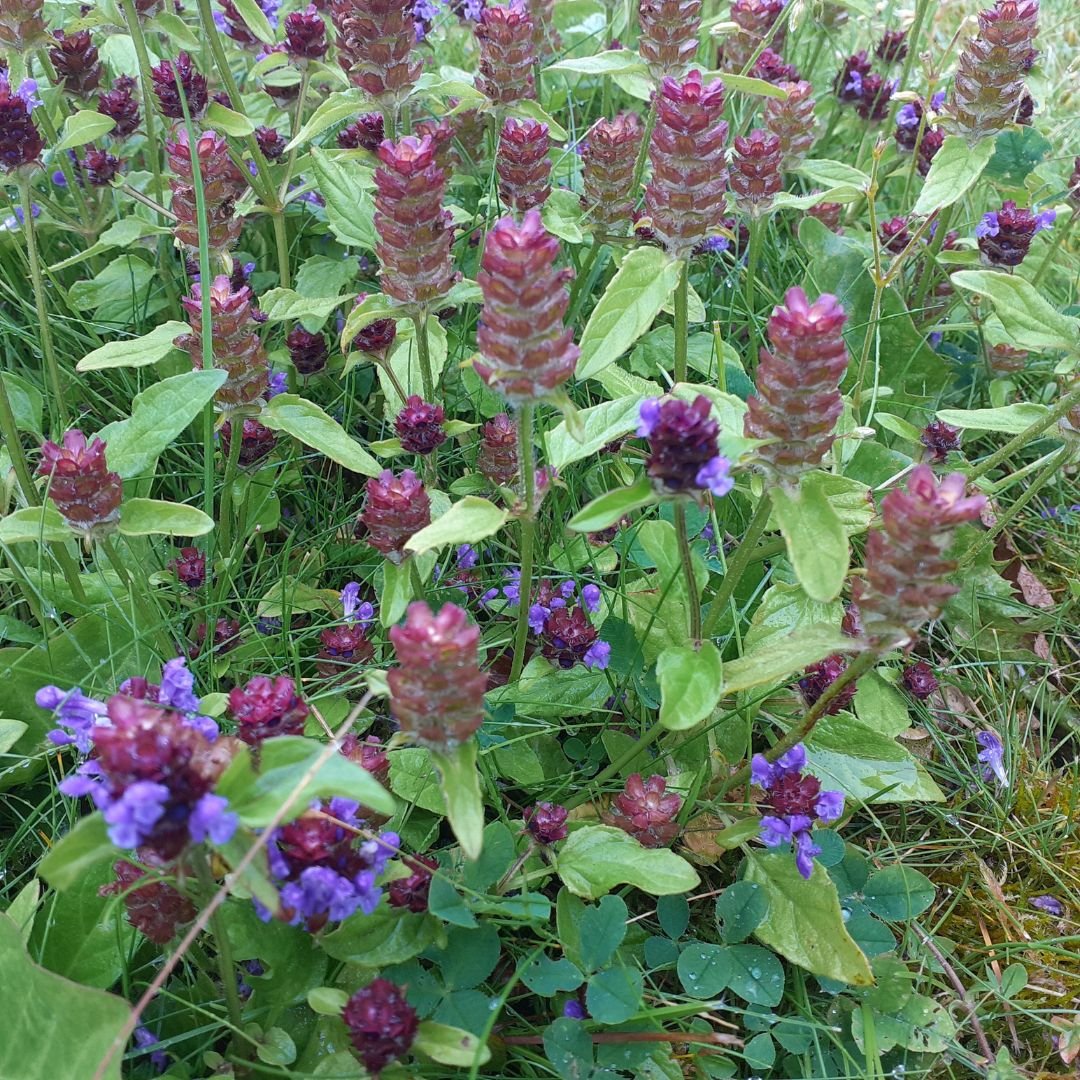
Prunella vulgaris
Prunella vulgaris
Plant Family
Lamiaceae
Botanical Description
Self-heal is a perennial herb growing 10-25 cm tall with opposite oval leaves and dense spikes of two-lipped purple-blue flowers. Square stems characteristic of mint family.
Cautions
Generally very safe. Limited research in humans. Consult healthcare provider if taking blood pressure medications.
Habitat
Lawns, meadows, woodland edges, waste ground.
Geographic Distribution
Native to Europe, Asia, and North America.
Growth Conditions
Full sun to partial shade. Various soil types. Tolerates mowing.
Plant Size
10-25 cm
Effects on the Body
Excellent wound healer, antimicrobial, may lower blood pressure. Traditional 'cure-all' herb.
Active Constituents
Ursolic acid, rosmarinic acid, flavonoids (rutin, hyperoside), caffeic acid, vitamins B1, C, K, tannins.
Safety Information
Pregnancy Safety: caution
Breastfeeding Safety: safe
Dosage
Tea: 1-2 teaspoons dried herb in hot water. Topical: as compress or salve for wounds.
Culinary Use
Young leaves and flowers can be added to salads.
Folklore & Historical Use
Called 'heal-all' and 'self-heal' reflecting belief in universal healing properties. Known as 'Xiakucao' in Traditional Chinese Medicine.
Scientific Research
Preclinical studies show antiviral, antibacterial, and anti-inflammatory effects. Contains rosmarinic acid, ursolic acid, and flavonoids. Some clinical evidence for antihypertensive effects in Traditional Chinese Medicine studies.
Maria Hrefna Ringdal


