
Trifolium pratense
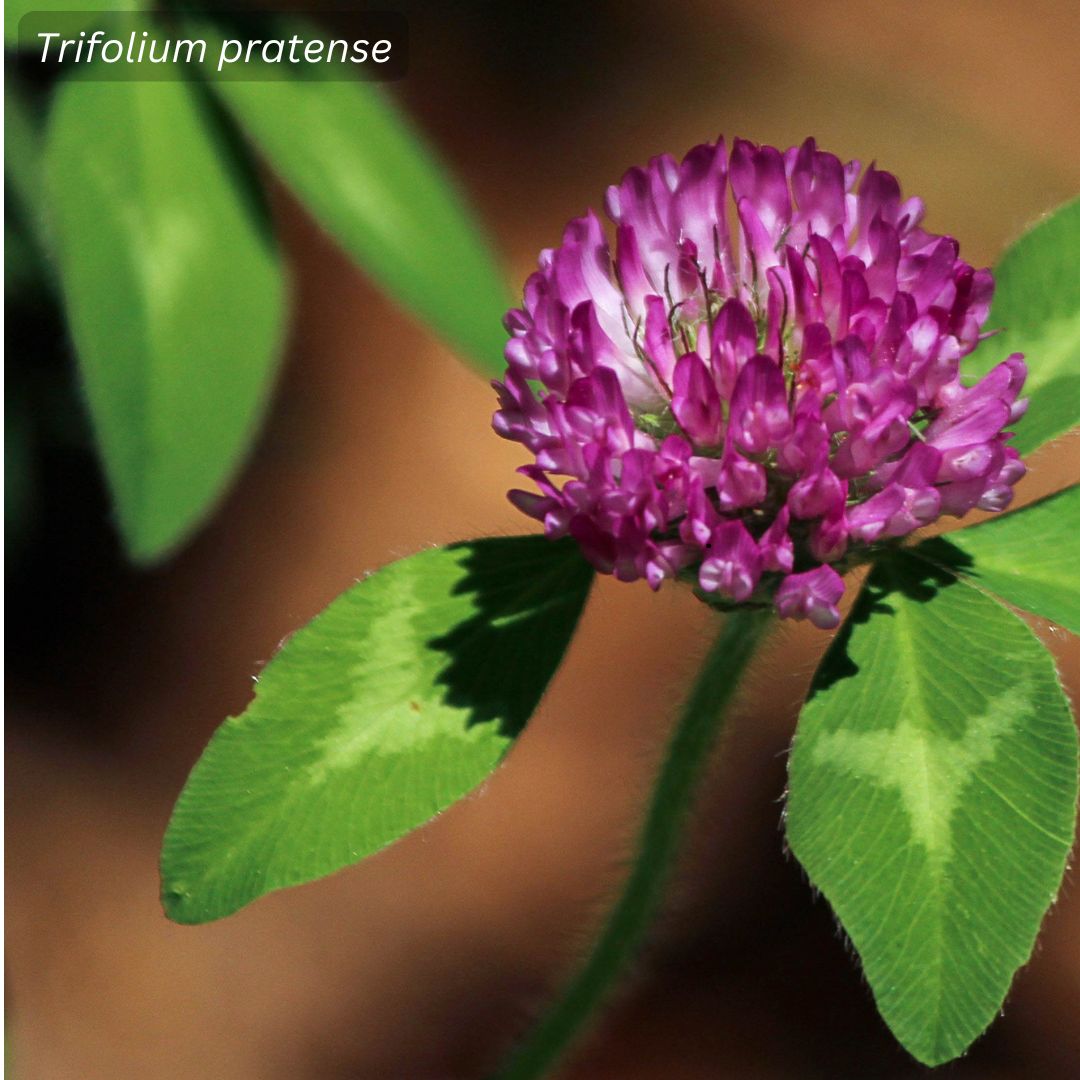
Trifolium pratense
Trifolium pratense
Plant Family
Fabaceae
Botanical Description
Red Clover is a perennial plant growing 20-80 cm tall with trifoliate leaves marked with a pale chevron pattern. Globular pink to red flower heads appear from May to September.
Cautions
Contains phytoestrogens - avoid in hormone-sensitive conditions, pregnancy, and breastfeeding. May interact with blood thinners and hormone therapies. Discontinue 2 weeks before surgery.
Habitat
Meadows, pastures, roadsides, lawns.
Harvest Instructions
Flower heads harvested when fully open, typically in morning. Dry quickly at low temperature.
Geographic Distribution
Native to Europe and Western Asia. Naturalized worldwide.
Growth Conditions
Full sun to partial shade. Moist, well-drained soil. Fixes nitrogen in soil.
Plant Size
20-80 cm
Effects on the Body
Blood purifying, supports skin health, contains phytoestrogens that may help with menopausal symptoms. Traditional use for skin conditions and coughs.
Active Constituents
Isoflavones (formononetin, biochanin A, genistein, daidzein), coumarins, flavonoids, salicylates.
Safety Information
Pregnancy Safety: avoid
Breastfeeding Safety: avoid
Dosage
Tea: 1-2 teaspoons dried flowers in hot water, steep 10-15 minutes. Tincture: 2-4 ml three times daily.
Culinary Use
Flowers can be added to salads. Young leaves edible. Flowers used to make wine and tea.
Folklore & Historical Use
Four-leaf clovers are considered lucky. Associated with the Celtic goddess Brigid. Traditional remedy for skin conditions.
Scientific Research
Clinical trials support use for menopausal symptoms. A 2015 Cochrane review found some evidence for reduction in hot flashes with isoflavone-rich extracts. European Medicines Agency approves for menopausal complaints.
Guðrún Guðjóna Svanbergsdóttir


